"Bez kompleksów" - Season 2, Episode 4. Paulina's story
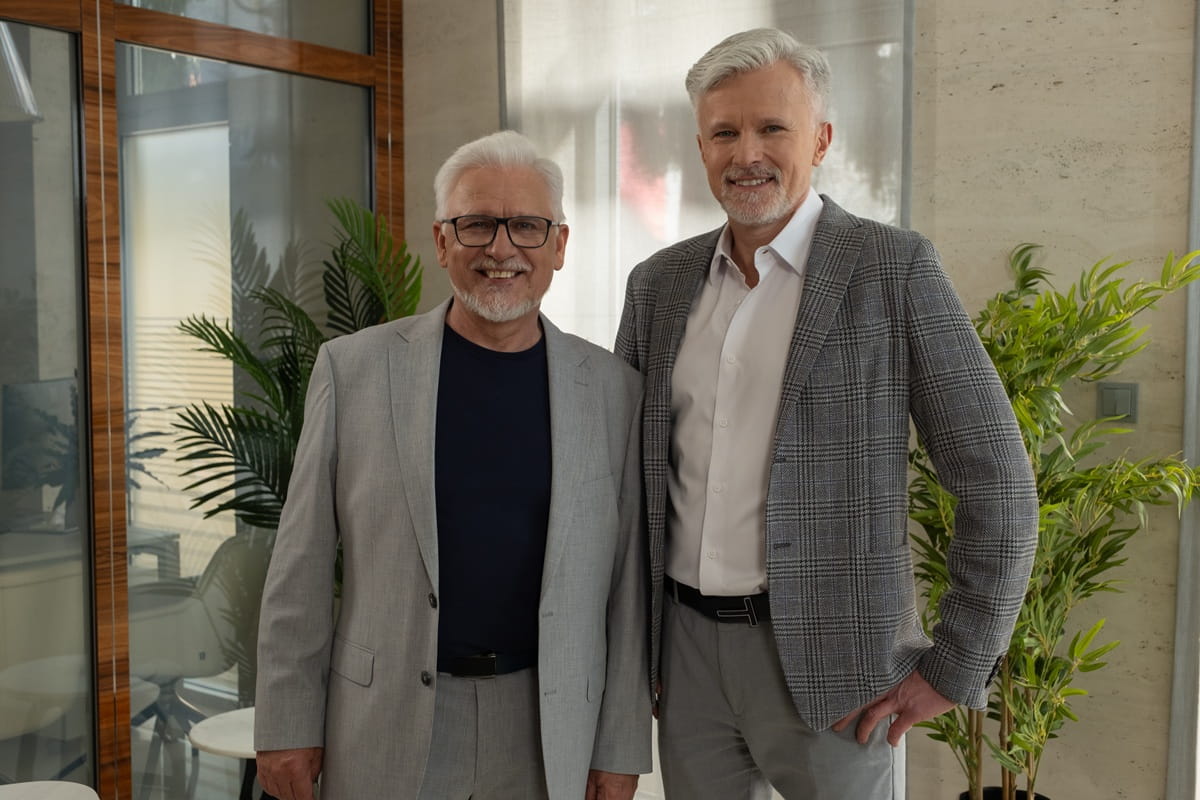
The protagonist of the fourth episode of the second season of the "Bez kompleksów" program is 38-year-old Paulina, who works as a children's entertainer. Her story includes dental treatment and two facial plastic surgery procedures: ear pinning and rhinoplasty. Both plastic surgery procedures were performed during a single operation, following a prior consultation and treatment plan.
Stage one - dental treatment
The first stage of Paulina's journey was a visit to Nawrocki Clinic. Her dental issues affected not only the appearance of her smile but also her daily life. Paulina relied on dentures, had to carry adhesive with her at all times, and the state of her teeth made eating difficult.
In Paulina's case, restoring her teeth required a staged approach and time for tissue healing before subsequent procedures.
Ear and nose correction during a single operation
The next stage of Paulina's story involved correcting her prominent ears, a problem she had dealt with since childhood. At Dr Szczyt Chirurgia Plastyczna, the patient had a consultation with Dr. Jakub Kret, who planned ear correction.
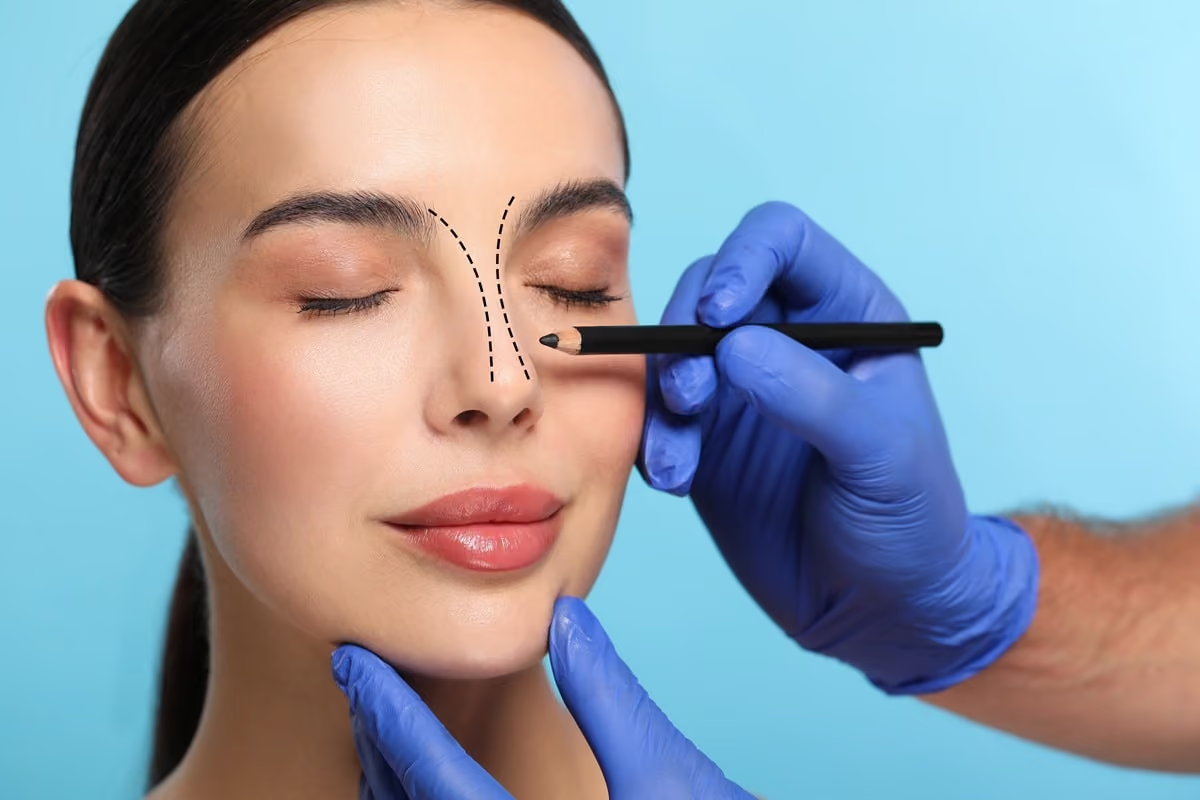
The second procedure was rhinoplasty performed by Dr. Marek Szczyt. In Paulina's case, both procedures were performed during a single operation.
The possibility of combining several surgical procedures requires individual assessment. Factors such as the patient's health, the scope of each surgery, the type of anesthesia, and the expected recovery process are all taken into account during planning. The fact that specific procedures were combined for one patient does not mean the same approach will be appropriate in another case.
Additional information can be found in the section on combined surgeries.
What does ear pinning involve?
Surgical ear correction, or otoplasty, can involve one or both ears, and the approach is tailored to the type and degree of the deformity.
For prominent ears, the surgery may involve gaining access to the cartilage through an incision in the skin behind the ear. The surgeon then reshapes the cartilage and secures it in the planned position with sutures. The procedure can be performed under local or general anesthesia, depending on factors such as the patient's age and the scope of the procedure.
The surgical approach is not identical for every person. Ear structures can vary in anatomy, degree of protrusion, and type of deformity, which is why the surgical technique is determined individually during the qualification process.
Rhinoplasty using Piezo technology
During Paulina's surgery, Dr. Marek Szczyt used Piezo technology. It is used for reshaping the bony structures of the nose and utilizes ultrasound.
Rhinoplasty itself can involve the bony part, the cartilaginous part, or both. The scope of the surgery is determined after analyzing the nose's structure during a consultation. Depending on the plan, the surgeon may use an open or closed technique and appropriately reshape the cartilaginous and bony framework of the nose.
The decision to use Piezo technology is made by the surgeon after assessing the nose's anatomy and the planned scope of the correction. Its use, however, does not guarantee the same healing process or identical results for all patients.
Qualification and preparation for surgery
Both rhinoplasty and otoplasty are preceded by a consultation with a surgeon. The doctor assesses the area planned for correction, the condition of the tissues, and the patient's general health. In the case of the nose, the consultation also helps determine whether the surgery will involve the bony part, the cartilaginous part, or both.
As part of the qualification, the doctor may order appropriate tests, such as a complete blood count, blood clotting parameters, glucose and creatinine levels, electrolytes, a urinalysis, and an ECG. The actual scope depends on the planned procedure, the type of anesthesia, age, health status, and other individual factors.
During the consultation, you should also inform the doctor about any medications you are taking. The approach to medication before surgery should be determined individually – patients should not change dosages or discontinue medications on their own.
Conditions that may be a contraindication to surgery or require it to be postponed include:
- clotting disorders;
- uncontrolled hypertension;
- uncontrolled diabetes;
- active skin and mucosal infections;
- pregnancy.
The final decision regarding qualification rests with the doctor after an individual assessment of the patient.
Recovery after rhinoplasty and otoplasty
After the surgery, Paulina faced a healing period. After about three weeks, she was able to gradually return to her daily routine. However, this is a description of one specific patient's recovery, not a universal timeline for returning to full activity after combined nose and ear surgery.
After ear correction, swelling and bruising may occur. In the first few weeks, it is important to properly protect the ears and avoid pressure or injury, in accordance with the doctor's recommendations. Healing and tissue remodeling take longer than the initial recovery period, so the result should not be judged solely on the appearance of the ears immediately after surgery.
After rhinoplasty, swelling may also persist longer than the basic recovery period. After the dressing is removed, the appearance of the nose continues to change as it heals and the swelling gradually subsides. The final result may take about 12 months or sometimes longer to stabilize. The timing for a reliable assessment is determined by the attending physician.
The timeline for returning to work, physical activity, and other daily routines depends on the scope of the surgery and the individual healing process. The use of Piezo technology alone does not allow for a universal recovery timeline for all patients.
Risks and limitations – what should you consider?
Making an informed decision about surgery requires considering the planned scope, potential benefits, limitations, and the risk of complications.
Nose and ear correction surgeries carry risks including infection, healing issues, unfavorable scarring, asymmetry, and complications related to anesthesia. Ear surgery may also result in a hematoma, while nose surgery can lead to breathing difficulties. In some cases, further treatment or corrective surgery may be necessary. The scope of risk is discussed individually during the qualification process.
After ear correction, protecting the surgical area during the first few weeks of healing is particularly important. Potential issues include displacement of the ear or problems with the sutures. In the event of sudden asymmetry or a change in the ear's position, the patient should not manipulate the area themselves but should contact their doctor.
In the case of nose surgery, it is necessary to account for the time required for the operated structures to stabilize. The appearance of the nose in the first weeks and months does not reflect the final result, as it is influenced by the healing process and the gradual reduction of swelling.
Paulina’s surgical journey and the results she achieved are unique to her and do not guarantee the same outcome for anyone else.
The next stages of Paulina’s story
Following her nose and ear surgery, Paulina also began the process of removing permanent eyebrow makeup she had previously received.
16 weeks after the surgery, the next stage of the program took place. The participant met with a stylist, a makeup artist, and a hairdresser, who prepared a makeover for her.
In the finale, Paulina saw the results of the stages of her journey so far – the nose and ear surgeries, dental procedures, and her makeover. Dental treatment was planned as a multi-stage process, so the program finale did not mark the end of her entire treatment plan.
Paulina’s story reflects the experience of one specific patient. The scope of procedures, the feasibility of performing multiple surgeries at once, recovery time, and the results achieved can vary between patients and require individual medical assessment.
This article is for informational purposes only. Qualification for surgery, risk assessment, and pre- and post-operative recommendations require an individual consultation with a doctor.




Related articles





Important information
Payment at the clinic is accepted exclusively via Visa and Mastercard.