

Kobido Massage - What Is It and Who Is It Recommended For?
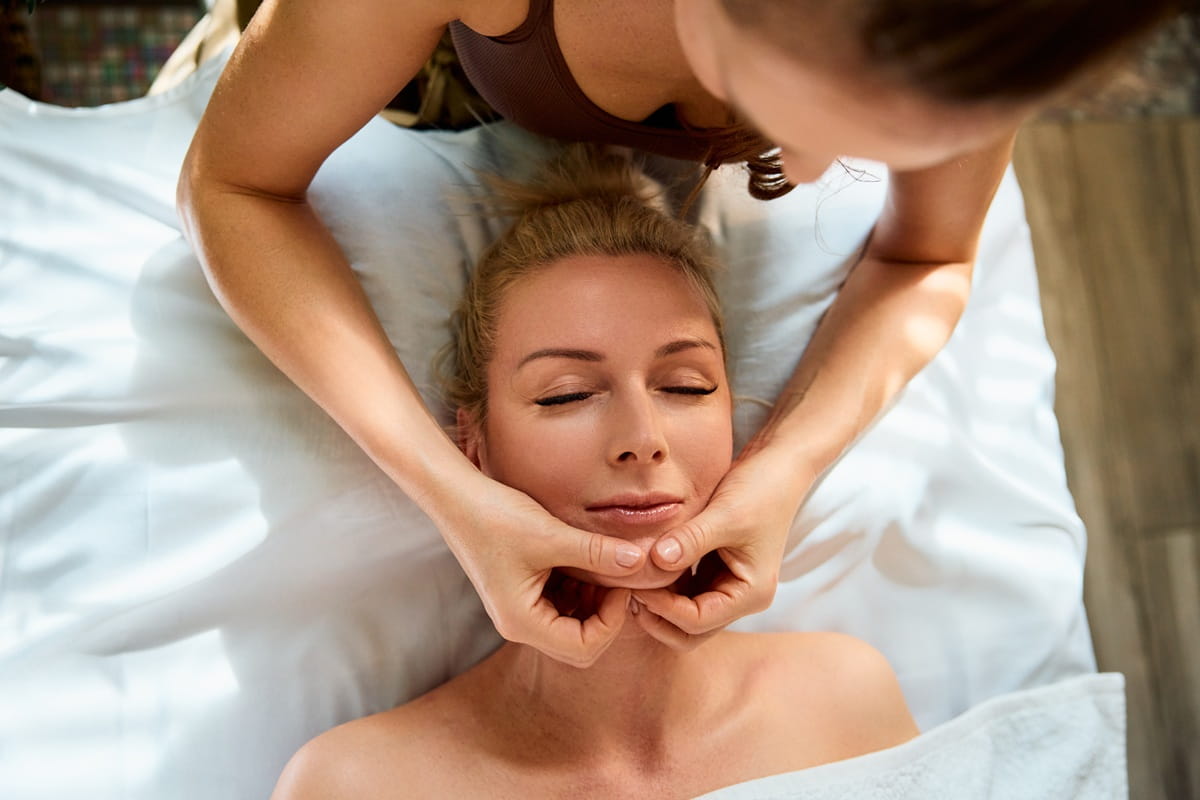
If you want to improve the appearance of your face but don't want to start with invasive procedures, it's worth taking a closer look at Kobido massage. This is a traditional Japanese technique for working with the muscles of the face and neck, which we offer as a natural alternative to aesthetic treatments. Kobido works deeply: it stimulates circulation, engages the muscles, supports lymphatic flow, and restores firmness and radiance to the skin.
This is not a gentle, relaxing home-style facial massage. Kobido is a dynamic, multi-stage, and intensive technique. It combines elements of lifting, drainage, and acupressure, which is why it works not only on the surface of the skin but also on deeper layers of tissue, muscles, and fascia. That's precisely why so many people see it not just as a pleasant ritual, but as real work on skin quality and the facial oval.
What Does Kobido Massage Involve?
In practice, Kobido is a manual therapy that aims to simultaneously relax, stimulate, and lift. During the treatment, we work on more than just the face itself. The massage also covers the neck, nape, décolletage, shoulders, upper back, and scalp, allowing all the tension accumulated in the upper body to gradually ease. This matters, because chronic muscle tension often shows up in facial features, contributes to fine expression lines, and worsens microcirculation.
The treatment itself usually takes 40 to 70 minutes. It includes makeup removal, the main massage, and the application of a post-treatment serum and cream. We begin by working on muscle tension, then move into a relaxation stage, followed by movements that stimulate blood and lymph circulation. The most distinctive stage is the lifting phase - quick, precise movements combined with gentle pinching of the skin. It's during this stage that momentary discomfort may occur, but the massage should not be painful.
What Results Can You Expect?
Many people notice the effects of Kobido massage after the very first visit. The face looks more rested, fresher, and firmer, and the skin regains its radiance. This treatment benefits both appearance and comfort, as it improves microcirculation, supports lymphatic drainage, and helps release tension accumulated in the face and neck.
You can expect effects such as:
- improved skin tone and firmness,
- smoother facial features,
- a subtle lift of the facial oval,
- reduced swelling and puffiness,
- reduced under-eye shadows,
- improved skin tone and radiance,
- relaxation of the facial and neck muscles,
- a feeling of relaxation and lightness.
With regular treatments, the effect becomes more visible and long-lasting. Kobido works well for people who want to improve skin quality and refresh the appearance of the face in a natural way, without changing their features and without surgical intervention.
Who Do We Especially Recommend Kobido For?
We most often recommend this massage to people who notice the first signs of aging, a loss of skin firmness, a sagging facial oval, or recurring swelling. It's also a very good option for those who want to take a preventive approach and are looking for natural support for the skin without needles or a scalpel. Kobido also works well when the issue isn't just wrinkles, but also muscle tension, a clenched jaw, stress, and a face that looks tired even after rest.
This treatment is suitable for both women and men. In our blog content, we also present Kobido as a good option for men who want to improve their skin's appearance, release muscle tension, and achieve a fresher-looking face without moving on to more advanced procedures. Kobido can also be a good choice for pregnant women, since it is non-invasive, has a relaxing effect, and helps reduce muscle tension and swelling.
Read also: Are cosmetic treatments safe for young mothers and pregnant women?
It's also a great treatment before an important occasion. If you want to quickly refresh your face, improve your skin tone, and achieve a subtle lifting effect, it's worth scheduling a visit a day or two before the event. That's when the skin usually looks especially good: firmer, more radiant, and even better prepped for makeup.
Read also: Pre-event treatments - a way to radiant skin before a big occasion
When Is It Better to Postpone Kobido Massage?
Although Kobido is a non-invasive treatment that doesn't require anesthesia, we don't perform it in every situation. There are times when the skin or the body first needs to calm down, be treated, or simply have time to recover after other procedures.
It's better to reschedule your visit if:
- you have an acute inflammatory condition of the body or skin,
- there are purulent periodontal conditions present,
- you recently had a tooth extraction,
- you're dealing with active acne,
- you recently had another aesthetic treatment and your skin is still recovering.
The intervals after certain procedures also matter. After fillers, you need to wait up to 4 weeks; after Botox, 2 weeks; and after PDO threads, up to 6 months. We also hold off on Kobido massage after laser treatments and mesotherapy - until the skin has calmed down. That's why it's always worth telling us about any treatments you've had recently before your visit.
How Often Is It Worth Getting the Massage?
The first effects are visible after just one treatment, but if you want a more lasting result, it's best to think of Kobido as a process. We usually recommend a series performed once a week for several weeks, followed by maintenance treatments every 2-3 weeks. This rhythm helps maintain the lifting effect, improved skin elasticity, and better facial contour for longer.
FAQ
Does Kobido Massage Hurt?
Kobido is an intensive massage, since we work not only on the surface of the skin but also on deeper layers of tissue and the muscles of the face and neck. The most intense stage tends to be the lifting phase, when quick, precise movements and gentle pinching of the skin are performed - this is when mild, short-lived discomfort may occur. However, this shouldn't feel like pain, just a sensation of firmer work on the tissues. The whole treatment combines elements of lifting, drainage, and relaxation, which is why many people feel both stimulated skin and a relaxed facial area after the visit.
What Does Kobido Massage Look Like, and How Should You Prepare for the Visit?
The treatment itself usually takes 40 to 70 minutes. We start with makeup removal, then move on to the main massage, and finish by applying a post-treatment serum and cream. Kobido isn't limited to the face alone - it also involves working on the neck, nape, décolletage, shoulders, upper back, and scalp, since tension that affects the appearance of the face often builds up there. It's best to arrive at your appointment without makeup, or a gentle makeup removal can be done on site. On the day of the treatment, it's also worth avoiding heavy cosmetics and other procedures performed on the face.
What Results Can You Expect, and How Often Should You Repeat Kobido?
The first effects are usually visible after just one visit. The skin looks brighter, smoother, and more rested, and the face may appear fresher and firmer. With regular treatments, we continue working on improving facial contour, skin firmness, microcirculation, and reducing muscle tension. If you want a more lasting effect, it's best to approach Kobido as a series - usually once a week for several weeks, and then every 2-3 weeks for maintenance.
Who Do We Especially Recommend Kobido Massage For?
We recommend Kobido to people who want to improve their skin's condition naturally and are not planning more invasive methods. It's a good choice for the first signs of aging, loss of firmness, a less defined facial oval, puffiness, or swelling. It also works well for people living under stress, as it helps release tension in the facial and neck muscles while also improving overall well-being. It's also a very good option before an important occasion, when you want a quick facial refresh, improved skin tone, and a subtle lifting effect without a long recovery period.
When Is It Better to Postpone Your Visit?
It's worth postponing your visit when the skin or body is in an inflamed state or is still recovering after other procedures. This includes acute inflammatory conditions of the body or skin, active acne, purulent periodontal conditions, and the period following a tooth extraction. The intervals after aesthetic treatments also matter: after fillers, you need to wait up to 4 weeks; after Botox, 2 weeks; after PDO threads, up to 6 months; and after laser treatments and mesotherapy, until the skin has fully calmed down. That's why it's always worth telling us about any recent facial treatments before your visit, so we can safely assess whether it's the right time for Kobido.
Worth watching


Related articles





Join our newsletter to stay up to date on features and news.

