

Recovery After the UltraPulse Alpha CO₂ Laser: Stages of Healing, Actual Downtime, and Skin Results
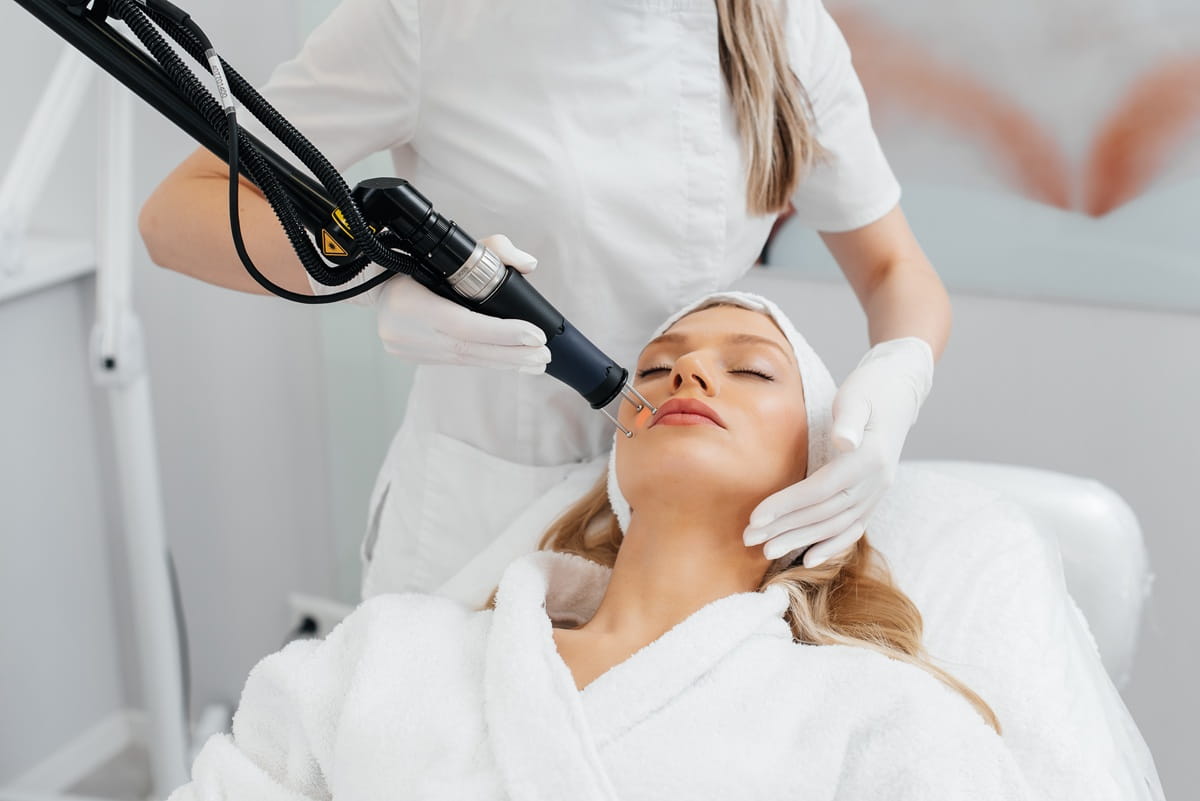
The UltraPulse Alpha fractional CO₂ laser (Lumenis) is an ablative treatment, meaning it controlled-ly damages the epidermis and part of the dermis. It sounds serious—and indeed, it is a procedure with significant “downtime.” In return, we get strong, highly predictable stimulation of skin remodeling: microcolumns of damage are created, while the skin between them remains intact, allowing for more efficient healing. It is precisely this mechanism that is responsible for improving skin quality, smoothing out wrinkles and scars, and evening out skin tone.
Below, I’ll walk you through the recovery process step by step: what to expect, when you’ll realistically be able to return to work, how long the healing process takes, and when you’ll see the final results.
Why does the skin need time to recover after a CO₂ treatment?
UltraPulse Alpha simultaneously emits multiple microscopic beams that create thousands of “microcraters” in the skin. In these areas, the epidermis and a portion of the dermis are vaporized (ablated), while a thermal effect occurs in the surrounding tissue. This triggers intensive remodeling and stimulates the synthesis of new collagen.
Simply put: after the procedure, the skin first heals, then peels, and then regenerates over the following weeks and months.
What does the procedure involve, and what does that mean for recovery?
The procedure is performed under local anesthesia —usually with an anesthetic cream applied 30–40 minutes beforehand. The doctor uses a scanner to direct the beam at the designated area. During the procedure, only a portion of the skin’s surface (about 20%) is affected, which reduces the risk of complications and shortens healing time compared to full ablation of the entire area.
You can go home right after the procedure, but you should expect some downtime—especially if the procedure involves the face.
Stages of healing – day by day
Day 0: Immediately after the procedure
- The skin is noticeably red and swollen.
- There may be some spotting.
- You may experience a burning sensation and a feeling of heat—similar to that after a severe sunburn.
This is the stage where it is most important to cool the skin as recommended, treat it gently, and avoid irritating it at all costs.
Days 1–3: redness and swelling
- In most people, the redness and swelling last up to 3 days.
- The skin feels tight, dry, and sensitive.
- Depending on the treatment settings, small scabs may form.
This is the time of year when it’s usually most obvious that “something was going on”—which is why many people plan to spend it at home.
Days 3–7: Exfoliation and “refreshing” of the skin
- Peeling usually takes 3–7 days.
- The scabs (if any) are starting to fall off.
Very important: Do not rub or pick at peeling skin or scabs. This is the surest way to prolong the healing process and increase the risk of discoloration or scarring.
Up to 7 days: functional healing
In most cases, the early symptoms (erythema, swelling, peeling) subside significantly within a week, and the skin looks “younger,” although it may still be reactive.
In practice: full recovery takes about a week, but many people return to work sooner.
Up to 14 days: completion of the healing process
- Wounds heal within a maximum of 14 days (depending on the intensity of the treatment and the area treated).
- Your skin may temporarily feel drier and more sensitive.
After two weeks, most patients are functioning normally, but the skin is still “working” deep down—and that’s a good thing.
Actual downtime: When can I get back to work and see everyone?
- You can usually return to work after 2 days —especially if your job does not involve exposure to irritants (dust, high temperatures) and if you are comfortable with visible redness.
- If you want to look “neutral” (for meetings, presentations, or client interactions), it’s safer to assume that the most noticeable phase lasts about 3–7 days, as that’s when peeling and/or scabbing occurs.
It’s a good idea to plan the treatment as a procedure after which your skin will look naturally “just treated.”
Post-procedure care – what really matters?
The most important principles stem directly from the healing process:
- Don't pick at scabs or try to speed up the peeling process.
- Makeup should not be worn for 24 hours after the procedure.
- SPF 50 sunscreen: it’s a must, not an option. Sunscreen reduces the risk of post-inflammatory hyperpigmentation and promotes even healing.
- Avoid irritating cosmetics and treatments (as recommended by your doctor), because your skin is temporarily more sensitive after CO₂ treatment.
When will I see the results, and how will they develop?
This is a very important aspect of "realistic expectations."
- The first results are visible as soon as the healing and peeling process is complete, as the skin becomes smoother and more even-toned.
- At the same time, the production of new collagen begins at that point, but it takes time for it to reach full capacity.
- The results become increasingly visible over a period of 3 to 6 months —this is the remodeling phase.
- We evaluate the full results after 3–6 months.
Depending on the specific concern (wrinkles, scars, discoloration, enlarged pores), the pace of improvement may vary, but the principle remains the same: the best results don’t appear “overnight,” but build up over time.
How many treatments are needed to achieve the best results?
The following series is usually recommended:
- 2–4 treatments,
- every 4–5 weeks,
- depending on the intensity of the previous session and your skin's reaction.
What matters here is adjusting the settings to suit the specific issue and your skin’s tolerance—stronger isn’t always better.
What are the indications for CO₂ treatment, and how does it affect the expected outcome?
The fractional CO₂ laser is particularly recommended when the goal is to improve skin quality, including in cases such as:
- fine lines and deeper wrinkles (including around the eyes and mouth),
- sagging and loss of firmness,
- when the pores are open,
- with an earthy hue, an uneven color,
- discoloration, age spots,
- stretch marks,
- scars (acne scars, burn scars, trauma scars, surgical scars),
- hypertrophic scars and keloids (in these cases, the assessment must be particularly careful).
The more "structural" the problem (e.g., a scar), the more important it is to be consistent and patient when assessing the results.
How can you prepare to make your recovery go more smoothly?
Based on pre-procedure instructions:
- One month before the procedure: discontinue use of retinol, isotretinoin, and other vitamin A derivatives; avoid microdermabrasion, deep peels, and products containing vitamin C and acids,
- One week before the procedure: stop using products containing calendula or St. John’s wort,
- The treatment area should not be tanned (avoid self-tanning products as well),
- Tell your doctor about any medications you are taking, including anticoagulants and photosensitizing agents.
These aren’t just formalities—they are real factors that influence the risk of side effects and the healing process.
When should you contact the clinic immediately?
Certain symptoms are common after the procedure (redness, swelling, peeling), but you should contact your doctor if you experience any of the following:
- increasing, severe pain that is disproportionate to the stage of healing,
- signs of infection (e.g., purulent discharge, increasing warmth, rapidly developing swelling),
- extensive blisters or a sudden worsening of the skin condition,
- symptoms of an allergic reaction to the medications being used.
In practice, it’s better to consult on one thing “too many” than to overlook a problem.
Contraindications – When Should the Procedure Not Be Performed?
The most important ones include, among others:
- pregnancy,
- a fresh tan and the use of self-tanning products,
- anticoagulants (require medical evaluation),
- active skin lesions, irritation at the treatment site,
- epilepsy,
- active cancer,
- implantable pacemaker,
- a tendency to develop keloids,
- vitiligo,
- the use of photosensitizing agents (vitamin A derivatives, tetracyclines, St. John’s wort, calendula).
The final diagnosis always depends on the medical history and a physical examination of the skin.
FAQ – Recovery After UltraPulse Alpha CO₂ Laser Treatment
How long will I be out of commission after the procedure?
Fullrecovery usually takes about a week. Many people return to work after just two days, but you should expect visible redness and possible peeling. If you want to look your best, it’s usually best to plan for a 3–7-day break.
What is normal after the procedure, and what should be cause for concern?
Common side effectsinclude redness and swelling (usually lasting up to 3 days), pinpoint bleeding immediately after the procedure, and peeling of the skin for 3–7 days. Contact the clinic if your symptoms worsen instead of improving, or if you experience severe pain, extensive blistering, or signs of infection (such as pus).
When does peeling begin, and how long does healing take?
The peeling processusually takes 3–7 days. Wound healing can take up to 14 days (depending on the intensity of the treatment and the area treated). During this time, do not pick at the scabs or try to speed up the peeling process.
When will I see the results, and when is it "finished"?
The initialresults are visible once the healing process is complete, but collagen remodeling takes longer. The results become increasingly noticeable over the course of 3–6 months—after this period, the full effect is assessed.
Can I wear makeup after the procedure, and how important is SPF?
Makeupshould not be worn for 24 hours after the procedure. Sun protection is mandatory—SPF 50 sunscreen is recommended, as the skin is more sensitive to the sun, and protection reduces the risk of post-inflammatory hyperpigmentation and promotes even healing.




Related articles




Join our newsletter to stay up to date on features and news.

